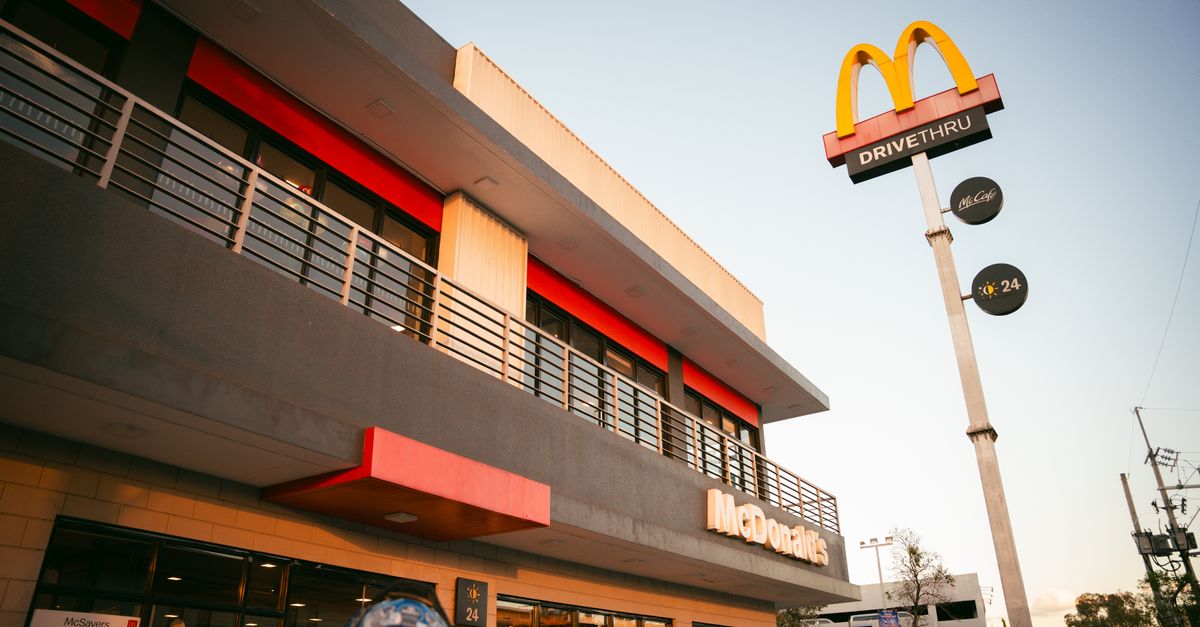
Restaurant menus illustrated with artificial intelligence have begun appearing across the food service industry, and many customers are noticing something distinctly wrong about them. The images exhibit eerily flawless, precisely symmetrical, and oddly smooth characteristics that trigger an intuitive sense of unease, even when viewers cannot immediately articulate why the illustrations feel off.
The root of this problem lies in how generative AI models are trained. These models learn from vast quantities of data to identify patterns, then use those patterns to generate new content. When asked to create a burger restaurant menu, for example, the AI draws heavily from its training data, which often includes menus from popular chains like Wendy’s, Burger King, and McDonald’s. According to Alex Lisle, Chief Technology Officer at Reality Defender, this explains why many AI-generated menus resemble a Chili’s menu from 2015—that era’s visual style was prominently represented in the training datasets.
The homogenization becomes more pronounced through a phenomenon called convergence, which occurs when AI models increasingly reference similar source material. Since fast food chain menus already share stylistic similarities, AI outputs trained on this data naturally replicate and reinforce that same aesthetic. Lee Rainie, Director of the Imagining the Digital Future Center at Elon University, explains that AI systems optimize for pleasingness and inoffensiveness, which leads to a smoothing effect that shaves off distinctive edges from both images and language.
This smoothing intensifies with repeated edits. A user named Labtec demonstrated this by creating a menu in ChatGPT and then editing it 100 times, documenting how the food images became progressively more rounded and smooth with each iteration. Restaurants likely fall victim to this same pattern when they make small revisions to AI-generated menus, adjusting prices or item names multiple times and inadvertently degrading the visual quality with each change.
An even more serious concern looms on the horizon: model collapse. As Lisle describes it, model collapse resembles a kind of mad cow disease for AI systems. When models train on too much of their own AI-generated content, the quality degrades severely. While convergence merely reduces output quality without rendering the system useless, model collapse represents a more catastrophic failure. The problem is inevitable to some degree, as AI-generated content seeps into the massive datasets used for training—a situation complicated by the tech industry’s voracious appetite for training data. Amazon has even been found sourcing rare books to scan for AI model training, then destroying those physical books after digitization.
Scientific research supports the widespread negative reaction to these AI menus. Researchers at the University of Duisburg-Essen in Germany discovered that AI-generated food images exhibit an uncanny valley effect—the same unsettling feeling people experience when viewing almost-but-not-quite-human robots or digital characters. People possess an almost unexplainable ability to sense when they are looking at AI-generated content compared to authentic imagery, even when they struggle to articulate the specific differences.
The visual problems in AI-generated food illustrations range from subtly wrong to absurdly impossible. Some images show cheese so bubbly and melted it resembles avant garde art rather than actual food. Shrimp appear genetically modified to consume their own tails, creating what observers have termed Lovecraftian food horrors. Ice cream scoops achieve impossible geometric perfection. These flaws stem from AI models attempting to recreate food without understanding fundamental principles—like an alien trying to construct a pizza without comprehending what makes it work.
The phenomenon represents a broader challenge facing artificial intelligence as these systems become more prevalent in commercial applications. The same technology that promises efficiency and cost savings also risks producing a flattened, homogenized aesthetic that people intuitively recognize as artificial and find viscerally unappealing—a significant problem for businesses trying to make food look appetizing enough to sell.